Top 5 Alternatives of Nintex for Workflow Automation
Many teams switch from Nintex because pricing tiers and maintenance overhead grow faster than their actual workflow needs. They end up paying for features they rarely use while still lacking clear audit trails for compliance tasks.
By the final section, you will know the five concrete criteria that separate workable tools from expensive shelfware, how Process Street handles both workflow automation and audit evidence in a single platform, and which of the listed alternatives best fits your documented requirements.
What to Look For in Workflow Automation Alternatives to Nintex
Workflow automation alternatives to Nintex must deliver enterprise-grade reliability while reducing implementation friction and ongoing maintenance costs.
Organizations evaluate these platforms based on seven essential criteria that directly impact deployment success and long-term value. Each factor addresses specific pain points common in business process management initiatives.
The first criterion examines maximum workflow complexity supported. Teams need clear visibility into node limits and nested approval capabilities before committing to any automation platform. Complex approval chains require robust branching logic that handles multiple decision points.
Integration approach represents the second evaluation point. Native integrations provide faster setup and ongoing reliability compared to API-based connections that require custom development and maintenance. The balance between pre-built connectors and custom API requirements affects implementation speed significantly.
Setup time varies dramatically across platforms. Customer reports indicate some solutions require days for basic configurations while others extend into weeks for enterprise deployments. This timeline gap directly influences project budgets and resource allocation decisions.
Compliance frameworks form the fourth consideration. Built-in support for SOC 2, ISO 27001, and GDPR reduces legal review cycles and ensures processes meet regulatory requirements without additional configuration.
Pricing transparency affects budget planning accuracy. Some platforms charge per workflow while others use user-based tiers. Understanding the cost structure prevents unexpected expenses as usage scales.
AI-assisted process mapping capabilities streamline initial automation design. These features analyze existing workflows and suggest optimization opportunities that reduce manual configuration requirements.
Audit trail granularity determines compliance reporting capabilities. Field-level change tracking provides more detailed records than workflow-level logging, which becomes critical during regulatory audits or internal reviews.
1. Process Street - Best Overall
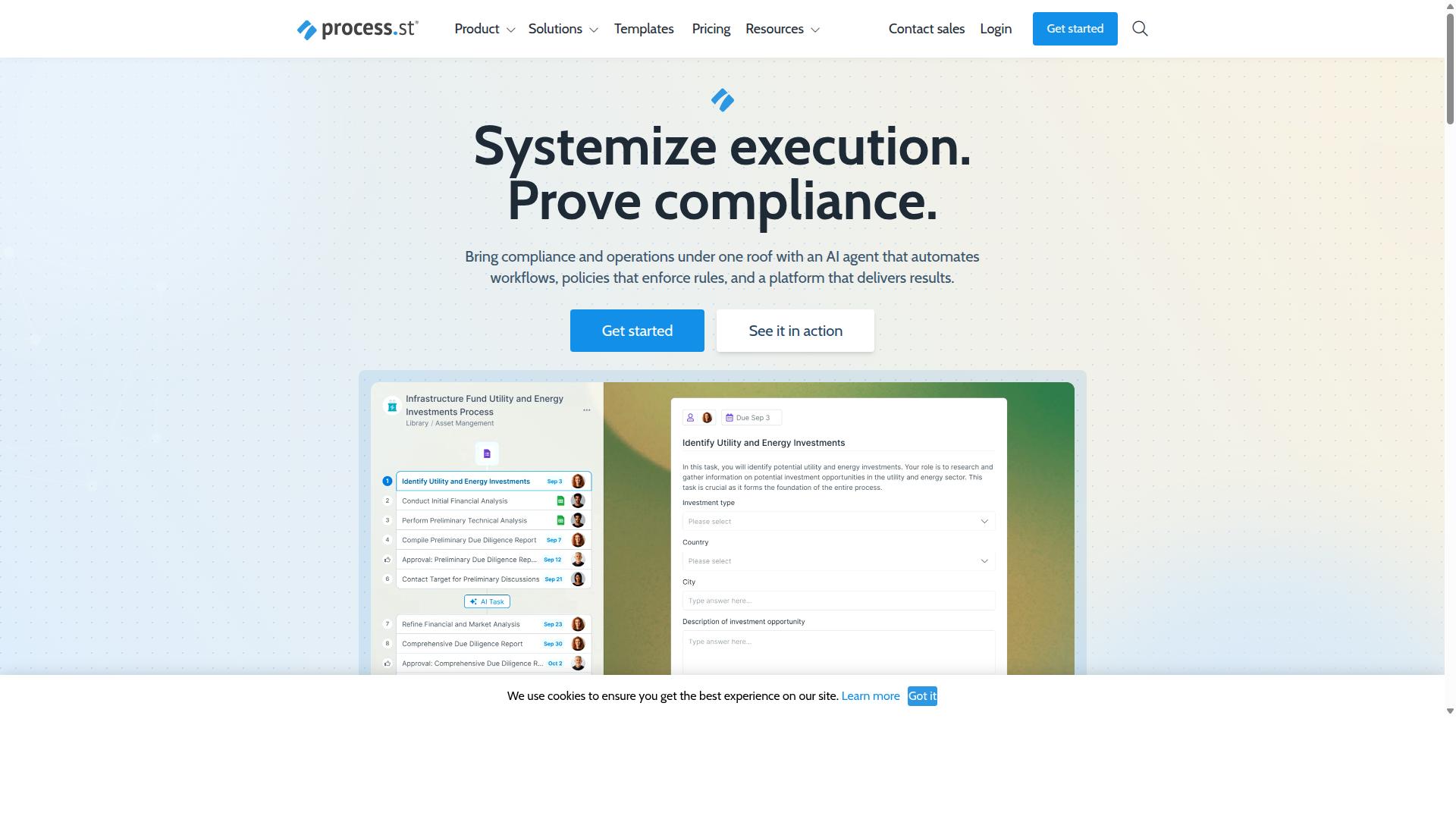
Process Street combines workflow automation with embedded compliance controls to eliminate the gap between policy documentation and daily execution.
This dual focus makes it the top choice for organizations that need both automation and audit readiness. The platform serves 3,000+ companies and over 1 million users who require process consistency across distributed teams.
Research suggests that companies struggle most with turning documented procedures into actual executed work. Process Street addresses this challenge by connecting compliance requirements directly to daily operations.
The IMCD UK case study reported 30% faster documentation and 75%+ reduction in setup time. These results stem from the platform's ability to convert existing policies into executable workflows without rebuilding processes from scratch.
Key Features for Workflow Automation
Process Street converts static policies into AI-powered workflows that execute across teams with real-time status visibility.
The Ops product turns compliance policies into executable workflows that teams can follow without interpretation. This approach removes the typical disconnect between documented procedures and actual work performed.
Startup plan users receive 100 automation actions per month. The platform includes 10 automation apps that handle common business process management tasks like approvals, notifications, and data routing.
These tools work together with existing systems through Zapier, Microsoft Power Automate, and Tray.io connections. Organizations can orchestrate workflows that span multiple applications without custom development work.
Compliance and Audit Capabilities
Process Street bakes SOC 2 Type II and ISO 27001 controls directly into every workflow instead of bolting them on afterward.
The Docs product provides governance for ISO 9001, SOC 2, SOX, and FDA requirements. This integrated approach ensures compliance standards are maintained throughout workflow execution rather than checked afterward.
Audit-ready proof is automatically generated during workflow execution. The system creates documentation trails that demonstrate compliance without additional administrative overhead.
Data never trains AI models, and the platform maintains HIPAA compliance with BAA available upon request. These security certifications support organizations in regulated industries that require strict data handling protocols.
2. LogicGate Risk Cloud
First sentence: LogicGate Risk Cloud focuses on governance, risk, and compliance workflows rather than general business process automation.
LogicGate Risk Cloud centers its platform on risk management rather than broad workflow automation. Organizations use it to structure compliance processes and track regulatory requirements through automated assessments. The system provides real-time dashboards that show risk status across different business units.
Pre-built templates support standard compliance frameworks. Teams can deploy SOX and GDPR workflows without building everything from scratch. These templates include audit trails and notification systems that keep stakeholders informed of required actions.
The pricing model operates on a quote-based system. Potential users contact LogicGate directly to receive custom pricing based on their specific risk management needs and organizational size. No public pricing tiers appear on the platform website.
Organizations needing structured risk and compliance processes find value in LogicGate's specialized focus. The platform supports drag-and-drop workflow design and integrates with existing systems. Customizable risk assessments help teams standardize their approach to regulatory requirements.
3. Appian
Appian combines low-code development with case management to handle complex, long-running business processes.
The platform supports BPMN 2.0 standards for process modeling and documentation. Teams can create visual diagrams that reflect actual workflows and compliance requirements.
Appian orchestrates both human tasks and robotic automation within the same process flow. This unified approach helps organizations coordinate manual approvals with automated data handling across departments.
Initial deployment typically requires professional services involvement. The vendor provides structured project delivery through its Appian Guarantee program, which targets eight-week implementation cycles for standard use cases.
Key capabilities include AI agents, RPA integration, intelligent document processing, and API connectivity. The platform also features case management studio tools and data fabric technology for connecting information across multiple systems.
Appian serves industries such as financial services, insurance, government, life sciences, and manufacturing. Packaged solutions address contract lifecycle management, claims processing, and public sector case management needs.
4. ServiceNow
ServiceNow extends its ITSM foundation into broader enterprise workflow automation across departments beyond IT. The platform connects HR operations, customer service, and security processes through unified data flows. Organizations often adopt it when they need consistent process handling across multiple business functions.
Workflow Studio serves as the primary design environment for creating automated sequences. This interface allows teams to map out complex approval steps, notifications, and task assignments without heavy reliance on traditional coding. Users can drag and drop elements to build processes that span several departments.
The Now Platform provides the backbone for ServiceNow's workflow capabilities. Process data flows between different modules, so an HR request can trigger IT provisioning and security access changes automatically. This integration reduces manual handoffs and keeps information synchronized across systems.
Most organizations access workflow features through broader subscriptions. ServiceNow typically bundles Workflow Studio capabilities within ITSM or HR Service Delivery packages rather than offering them as standalone products. This approach works well for companies already running ServiceNow for service management.
Enterprises often choose this route when they want workflow automation tied to their existing service management investments. Teams can extend their current ServiceNow footprint into additional departments without introducing separate platforms. The licensing structure reflects this bundled approach across the product portfolio.
5. Onspring
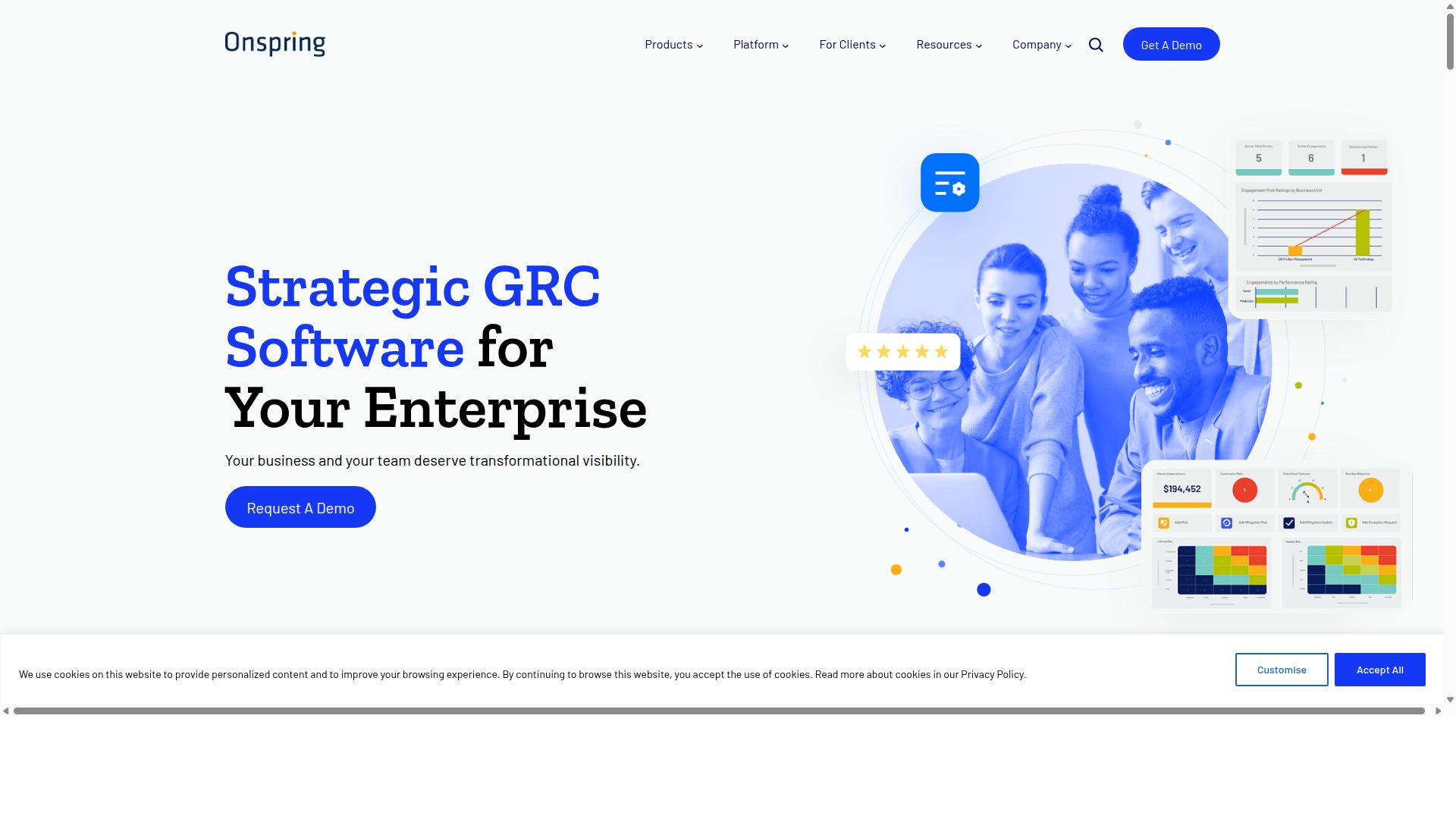
Onspring offers a configurable GRC platform that emphasizes policy management alongside workflow automation. The platform targets enterprise environments where compliance requirements drive process needs. Organizations can configure workflows that support both operational tasks and regulatory obligations.
drag-and-drop form builder allows teams to design custom interfaces without coding. This feature supports rapid creation of data capture forms that integrate directly into automated processes. Users can adjust layouts and fields as business requirements change.
Pre-built compliance templates help organizations address common regulatory frameworks quickly. These templates cover areas such as policy documentation, risk assessment, and audit preparation. Teams can modify these starting points rather than building compliance workflows from scratch.
Public pricing information is not available for Onspring. Prospective users must contact the vendor directly for licensing details and enterprise quotes. This approach is common among platforms designed for large-scale deployments.
How to Choose the Right Option
Selection should map directly to the operational realities of the teams that will own and audit the workflows. Different automation platforms serve distinct needs based on how organizations structure their processes and compliance requirements.
Team size affects platform choice significantly. Startup teams with five users need platforms that accommodate small groups without forcing expensive enterprise contracts. Larger organizations require unlimited user access to support cross-functional collaboration across operations, compliance, and finance departments.
Compliance burden varies by industry and regulatory environment. Some platforms include SOC 2 certification as a built-in feature while others require additional modules or third-party services. Financial services and healthcare organizations must evaluate how compliance features work together with their existing audit workflows.
| Selection Factor | Key Considerations |
|---|---|
| Team Size | 5 users on startup plans versus unlimited user access |
| Compliance | Built-in SOC 2 versus separate compliance modules |
| Automation Volume | 100 actions per month cap versus usage-based pricing |
| Technical Skill | Setup complexity and required expertise level |
| Data Residency | Global options across US, UK, EU, Canada, Australia, UAE |
Automation volume requirements determine cost structure and platform selection. Teams processing high volumes of workflow actions need usage-based models rather than strict monthly caps. Customer management and document control processes often exceed basic action limits.
Technical skill level required for setup influences implementation time and ongoing maintenance. No-code automation platforms reduce dependency on IT resources while low-code platforms offer more customization for complex approval workflows and process mapping requirements.
Global data residency options matter for organizations with international operations. Multi-regional data storage across US, UK, EU, Canada, Australia, and UAE locations supports compliance with local regulations while maintaining workflow orchestration across distributed teams.
Final Verdict
Process Street stands out by delivering both automation depth and compliance proof without requiring separate audit tooling.
More than 3,000 companies and over 1 million users already run standardized workflows on the platform. This adoption shows that large organizations trust the system for daily operations.
The platform carries both SOC 2 Type II and ISO 27001 certifications. These credentials remove extra compliance overhead for teams that must meet regulatory demands.
Customers also gain HIPAA and GDPR compliance through the same account. A business associate agreement is available upon request for healthcare workflows.
Teams using the platform report faster documentation cycles and shorter setup windows. IMCD UK noted a 75 percent reduction in setup time after switching.
Process Street keeps user data away from AI training sets. This policy protects proprietary processes while still allowing task automation and workflow orchestration.
When comparing Nintex alternatives, organizations gain concrete advantages from verified compliance and proven scale. The combination reduces both audit effort and risk exposure.
Recommended Resources: